HE DIDN’T WANT TO BE REMEMBERED AS “THE KID WITH CANCER.” HE WANTED TO BE THE KID WHO PLAYED THE VIOLIN.
When Tyler Butler-Figueroa walked onto the America’s Got Talent stage in 2019, he was only 11 years old.
He carried a violin in his hands and a story that had already required more courage than most children should ever need.
Tyler was diagnosed with acute lymphoblastic leukemia when he was four and a half years old. Instead of spending his early childhood playing sports with friends, he faced years of chemotherapy, hospital visits and difficult treatments.
Losing his hair made returning to school especially painful. Tyler said that some children bullied him because he looked different. Rumors were even spread that his cancer was contagious, causing other students to avoid him.
Then music entered his life. Tyler began learning the violin at seven and a half years old. The instrument gave him somewhere to place the emotions he could not explain. As his confidence grew, the violin became more than a hobby. It helped him rebuild the identity that illness and bullying had tried to take away.
Before his AGT audition, Tyler explained it perfectly: “I just didn’t want to be the kid with cancer. So now, I’m the kid who plays the violin.” On stage, he performed an energetic version of “Stronger” by Kelly Clarkson. The song could not have been more appropriate.
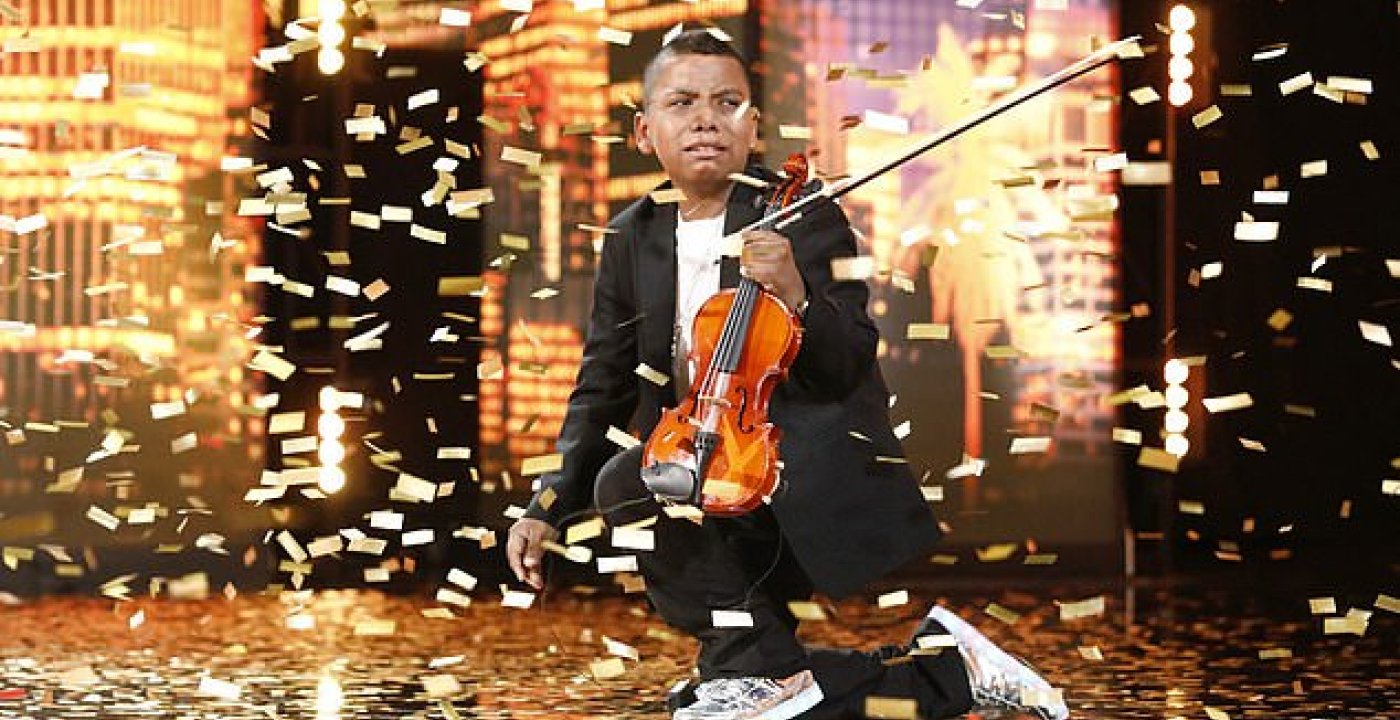
Tyler did not stand still and ask the audience to feel sorry for him. He moved across the stage, smiling and playing with an energy that made his joy impossible to ignore. Simon Cowell was so impressed that he pressed the Golden Buzzer, sending Tyler directly to the live shows as golden confetti covered the stage. But the Golden Buzzer was only the beginning.
Tyler continued advancing through the competition and reached the Season 14 final. For his final performance, he played “Survivor” by Destiny’s Child, turning another famous song into a statement about his own life. He did not win the season, but his impact could not be measured by a final ranking. During the finale, Tyler received messages from other young cancer patients and survivors who had been encouraged by his performances.
That may have been the most meaningful victory of all.
Tyler’s story is not powerful simply because he survived an illness. It is powerful because he refused to let the most painful chapter of his childhood become his entire identity.
The world first heard about a boy who had fought cancer.
Then Tyler lifted his violin, began to play and showed everyone who he had chosen to become.